
Judy Batalion’s The Last Woman of Warsaw follows two very different Jewish women in pursuit of a common goal

By Mike Cohen

Native Montrealer Judy Batalion, the critically acclaimed author of several non-fiction books, most recently the New York Times bestseller The Light of Days, has published a powerful debut novel called The Last Woman of Warsaw. While writing The Light of Days, the story of Jewish women who fought the Nazis from the ghettos in Poland, Batalion became obsessed with the cosmopolitan society that had created these extraordinary young women. Her novel shines a light on the rarely explored world of inter-war Warsaw, a city filled with theaters, cabaret, and nightclubs with revolving dance floors. It follows two very different Jewish women in the vibrant, stylish city (the “Paris of the North”) in the late 1930s, as they unexpectedly come together in their search for love, meaning, and a sense of home—while grappling with the storm clouds gathering around them.

Batalion grew up in Montreal. She studied the history of science at Harvard before moving to London, where she did a PhD at the Courtauld Institute of Art and worked as a curator by day and a comedian by night. She is now an author and essayist, and lives with her husband and daughters in New York City. Her brother is Eli Batalion, one half of the YidLife Crisis comedy duo,.
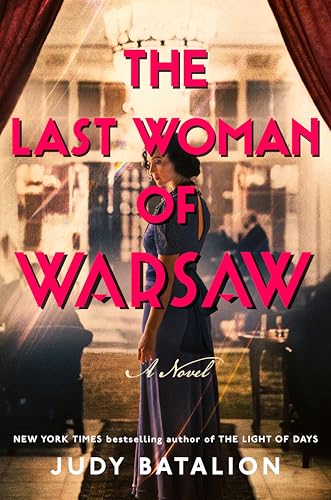

This book is real page turner, cleverly switching each chapter between the man characters Zosia and Fanny.

Fanny Zelshinsky is a sophisticated daughter of the city’s Jewish elite who wants nothing more than to be recognized as a legitimate artist by her family, her radical professor whom she idolizes, and the world at large. She is engaged to a decent man, but she fears marriage will stymie her artistic pursuits and debates whether she’ll go through with the wedding. Meanwhile, Zosia Dror has left behind her small northeastern shtetl and religious family in the wake of violence. She is part of a budding youth movement that believes in social equality and creating a Jewish homeland, but she must resist the city’s many distractions—the glitz, the hubbub, and the keen eyes of a tall, handsome comrad
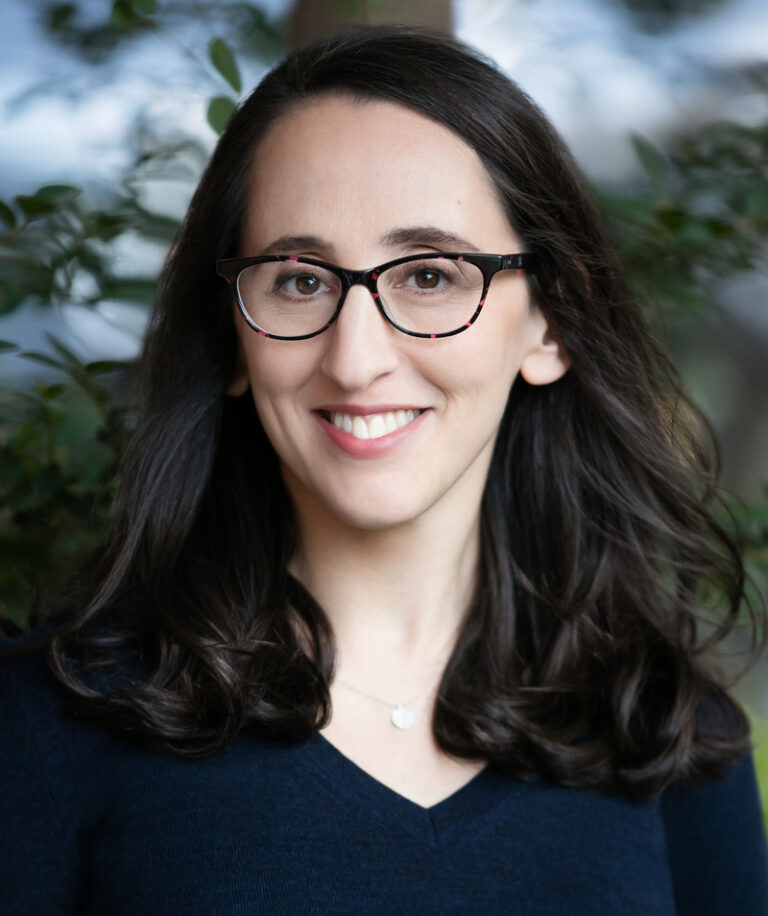
Judy Batalion Photograph © Beowulf Sheehan

The two young women are thrown together when legendary artist Wanda Petrovsky—a member of Zosia’s movement leadership and Fanny’s beloved photography professor—goes missing. As they search for the elusive firebrand, questions arise: is Wanda simply hiding, or is her disappearance connected to the rise in antisemitic laws and university practices? Fanny and Zosia are unlikely allies, but they must bridge their differences to help someone they both care for—and dodge the danger mounting around them in the process.

“While writing The Light of Days, the true story of young Jewish women who fought the Nazis from the ghettos in Poland, I came across countless examples of confident, bright lipstick-wearing Jewish women,” Batalion said. “I became obsessed with 1930s Poland, and especially with Warsaw, an exhilarating locus of cultural florescence that’s been eclipsed by what came after. The Last Woman of Warsaw is in many ways a fictional prequel to The Light of Days and tells the story of an unlikely friendship between two 22 year -old Jewish women, each from a different walk of life, showcasing the diversity of Polish Jewry in a thriving, sophisticated Warsaw in the late 1930s.”

Before Vegas, Batalion notes that Warsaw was the capital of neons! “One-third of the population, including my grandparents, was Jewish, and shared in a golden age of poetry, film, and comedy. Jews were multilingual,” she explained. “ Jewish political parties abounded. There were 180 Jewish newspapers in the capital alone! Moreover, it was a progressive era for women, who gained the vote in 1918. Education was mandatory for girls; women attended university, married late, and worked, comprising nearly half the Jewish labor force. Even their clothes favored comfort and movement. Young Jewish women, some of the first not to be match-made and pursuing love relationships, were learning to make their way in the modern world, fueled by neat haircuts, fitted blazers, and shorter skirts. These women were ready to soar—figuratively, and literally.”

Batalion goes on to say that this was also a time of growing nationalism and antisemitism, both social and institutional. “Riots and boycotts abounded, and anti-ethnic laws were passed; notes of doom seeped in from neighboring Germany,” she said. “ Still, Poland’s Jews went on; they’d spent 10 centuries finding their place in a country where they were “othered,” but also, tolerated, emancipated, and thrived. They had no idea their lives straddled the precipice of hell. This is not the story about how Jews died in Poland, but rather a story about how they lived there. These characters are aware of political conditions that shape their lives, but primarily, they are experimenting with being modern women. They grapple with friendships and romance, with the meaning of art and identity, and with their feelings about their Jewish heritage and their future, all as they try to figure out what lives they want to lead in a future that remains bright. This is a novel about friendship, and how small decisions can have great consequences. We readers understand the cataclysmic context in a way the characters do not. When I first drafted this novel in 2021, I aimed to bring to life “Golden Warsaw,” to resurrect the art world that was annihilated alongside its artists and audiences. In the dark years since, with increasingly rampant extremism, nationalism, terrorism, barbarism, and antisemitism, this exhilarating and terrifying period is only more relevant. It is crucial that we understand what a vibrant and sophisticated place Warsaw was, because only then we can understand that “they” are like “us,” and what happened to their vibrant, sophisticated world can so easily happen to ours.”

For more details click here

Donald Berman Chai Lifeline Canada Rebuilding Dreams Gala had it all

By Mike Cohen

The Donald Berman Chai Lifeline Canada supports children and parents who are facing life-threatening or life-long illness by providing services that foster resilience and hope for the whole family. They lead with dedication and integrity and bring empathy, respect, and humility to the families and community they serve.

Event Chairs Laura Sonego Assor and Michelle Cola Hasen, with Yohay Sponder.


On April 1, 2025 more than 500 people packed the Shaar Hashomayim Congregation in Westmount for the Rebuilding Dreams 2025 Gala.

When a child is born or diagnosed with a serious illness, Chai Lifeline knows that the illness impacts not just the person who is sick, but their entire family. Its programs and services take care of everything from the mundane, like help getting to doctors’ appointments and hot meals when children are hospitalized, to the extraordinary, like medically supervised overnight camps that give children confidence, courage, and life skills they need to fight dreaded illnesses. All programs and services are free of charge


Among those honored were Montreal Genetic Disorder Fund Chair Julie Kristof as Parent of the Year; real estate power couple and Young Leadership Award recipients Brittney Rozenblat and Jacob Strich; and Montreal Children’s Hospital Senior Advisor for Patient Experience Jordana Saada, receiving the Health Impact Award. One other honoree asked that their name not be published.


Outstanding Israeli standup comic Yohay Sponder was the featured performer. The evening began with cocktails and a vast buffet followed by the program, expertly organized by Morty Silber’s Mad Strategies and event planner Angela Lehrer. It was a well-oiled machine, flowing beautifully. The format rotated between video presentations about the winners and the important work the organization does to words of inspiration from Montreal Director Yaacov Blanshay and Founder Rabbi Simcha Scholar. At the end of the program it was time to eat again with a decadent sweet table. Sponder had everyone in stitches, sharing how so many of his shows have been cancelled in Europe because of antisemitism. He joked that the ensuing media coverage merely resulted in him selling out his other engagements. One of his best lines of the night was how Israel is the only democracy in the Middle East. “And we have had the same Prime Minister for 20 years,” he said in reference to Benjamin Netanyahu.


Sponder stuck around after the show, posing for selfies and talking to fans. Watch my chat with him here from my Instagram account.


Here is some more about the award winners:


Julie Kristof

Julie Kristof gets her award from case manager Raisy Weisemann.


Julie has been married to Murray Yazer for almost 25 years and has two children, Alex,20, and Mimi, 17, who is affected by Familial Dysautonomia. Julie holds a BSC, an MBA and works in marketing research professionally. She sits on the board of JEM, Nellie Foundation, and is chair of the Montreal Genetic Disorder Fund raising awareness of genetic disease and increasing access to testing. She is involved in many community organizations and sits on multiple committees in the English Montreal School Board, including as Parent Commissioner of Special Education services. Julie is an advocate and believes we have to use our voices, skills, luck and education to make the world better. Julie has supported Chai Lifeline Canada for many years in so many ways including riding in the Tour de Simcha event and fundraising, attending events with her family or sitting on our Montreal leadership team. She gets inspired when witnessing a child feel seen not for their illness but for who they are, like they do at Camp Simcha where her daughter Mimi has been for several summers. Her wishes are that Chai Lifeline Canada continues to bring hope and light to darkness in our community.


Brittney Rozenblat & Jacob Strich

Brittney Rozenblat (left) and husband Jacob Strich (right) accept their award.

Brittney and Jacob are parents of three beautiful boys and have a private family real estate office. Brittney has also written a children’s book, The ABCs of Finance. Becoming parents has been the most rewarding aspect of their lives deepening their sense of empathy and their desire to make a positive impact in the world. They take inspiration from the strength and resilience they see in the families that Chai Lifeline Canada supports and from the Jewish community, its unity, commitment and dedication especially in times of hardship. Chai Lifeline Canada holds a very special place in their heart as it was the beginning of their philanthropic journey and has grown into something deeply personal and meaningful to them. For more than six years they have been sponsoring and delivering holiday packages for Chai Lifeline Canada and spreading happiness and comfort. When they deliver a package and see the joy it brings, it fuels their passion to keep doing more. Their hope is that Chai Lifeline Canada will continue to receive the support it needs to expand its programs, bring comfort and happiness to the families so they don’t have to navigate illness alone.


Jordana Saada

Regional Director Yaakov Blanshay, Jordana Saada and Emcee Jonah Kachani.


Jordana is a Registered Nurse by training and has worked in a wide variety of healthcare settings, in the pharmaceutical industry, and at McGill University. She currently works at the Montreal Children’s Hospital as Senior Advisor, Patient Experience. She holds a Bachelor of Science in Nursing, a Master’s in Holocaust and Genocide Studies, and is currently pursuing a doctoral degree in Holocaust studies. Jordana has become an integral partner with Chai Lifeline Canada by providing valuable guidance, developing inter-organizational relationships with key personnel, and spearheading personalized initiatives. Her dedication and efforts create an environment of collaborated care and support for Chai Lifeline Canada children and their families.


Laura Sonego Assor and Michelle Cola Hasen chaired the program, with Reitzu Iczkovits as event lead.

For more about this wonderful organization go here: https://chailifelinecanada.org/